
The Supreme Court has mandated urgent action from Delhi and three neighbouring states (Uttar Pradesh, Rajasthan, Haryana) to tackle the sharp increase in vehicular emissions contributing to air pollution in the National Capital Region. The court has sought detailed responses on measures to prevent over-age vehicles, enforce emission standards, and improve inter-state coordination, highlighting the critical need for intervention despite a decline in stubble burning.

The Supreme Court has asked the government to consider designating an alternative venue to Jantar Mantar for peaceful protests in the national capital, emphasising the need for a site with basic amenities. This suggestion arose during a hearing concerning proposed restrictions on metro stations and train cancellations due to a protest.

The Supreme Court's High-Powered Enquiry Committee (HPEC), tasked with investigating alleged violence and police excesses during CJP-led protests at Jantar Mantar, has reported receiving hardly any complaints from affected individuals. Despite extensive efforts to solicit complaints via a portal, email, and newspaper notices, the response has been minimal. The court has urged petitioners to forward materials and encourage victims to come forward, while also accepting a member's request to be relieved from the panel.

The Supreme Court has overturned the Indian Navy Selection Board's decision to deny Permanent Commission to a woman officer in the Judge Advocate General Branch. The court found that the board failed to properly consider her favourable Annual Confidential Reports and unduly focused on past non-recommendations. The Navy has been directed to reconsider her claim within six weeks.

Chief Justice of India Surya Kant asserted that the judiciary cannot be browbeaten, during a hearing on a plea against a political march to the Supreme Court by Rahul Gandhi and other opposition leaders on October 12. The plea alleges an attempt to obstruct the judicial system and seeks a ban on political demonstrations within court premises. The court has issued notices to the leaders and ordered the preservation of CCTV footage from the incident.

The Supreme Court has formally acquitted former Prime Minister Manmohan Singh in a high-profile coal block allocation case, setting aside a summoning order against him and accepting the CBI's closure report.
The Supreme Court has dismissed a plea challenging the resignations of six AIADMK MLAs who subsequently joined the ruling Tamilaga Vettri Kazhagam (TVK). The court affirmed that resignation and disqualification are distinct constitutional processes, upholding the Speaker's acceptance of the resignations and stating that the Speaker was not required to inquire into motives.

The Supreme Court of India has sought proposals for establishing a permanent financial corpus to support patients suffering from Spinal Muscular Atrophy (SMA), a rare genetic disorder requiring expensive treatment. This initiative follows an earlier case involving comedian Samay Raina, which led the court to examine broader systemic concerns for SMA patients.

The Supreme Court has stayed the reinstatement of IAS officer Rinku Dhugga, who was compulsorily retired by the Centre following a controversy involving the Thyagaraj Stadium. The Centre challenged the Delhi High Court's decision to set aside her compulsory retirement, which was initially ordered after allegations of misusing the stadium for dog walking and unauthorised absence.

The Supreme Court has asked the Patna High Court to decide on the bail plea of Bihar-based contractor Rishu Shree, who has been jailed for five months in a money laundering case linked to alleged commissions in public tenders. The Patna High Court had previously questioned the ED's investigation, suggesting it was targeting "pawns" while principal actors remained free.
The Supreme Court has agreed to hear a plea seeking to deny retirement perks and benefits to constitutional functionaries, including judges, who resign to avoid removal proceedings. The petition argues that such a practice undermines the Rule of Law and constitutional principles.
The Supreme Court has ruled that the Bar Council of India (BCI) lacks the statutory authority to regulate the conduct of law students. The court clarified that disciplinary actions against students fall under the purview of their respective educational institutions, setting aside BCI notifications issued during a controversy involving NALSAR University students.
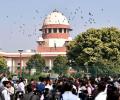
A heated exchange occurred in the Supreme Court between senior advocate S Muralidhar and Solicitor General Tushar Mehta over Mehta's use of the term "Naxalites" during a hearing on the national song Vande Mataram. Muralidhar strongly objected to the remark, demanding its withdrawal, while Mehta defended his statement, referring to an ideology rather than individuals. The bench intervened, emphasising decorum and constitutional issues.
The Supreme Court has sought responses from the Maharashtra government and other parties regarding a plea to fell and transplant trees for a proposed National Centre of Excellence for Animation, Visual Effects, Gaming, Comics and Extended Reality in Mumbai's Film City. The project, deemed of "eminent national importance," requires the felling of 124 trees and transplanting 333, with compensatory afforestation planned. The court's intervention follows a previous order restricting tree felling in the Aarey colony.

The Supreme Court agreed to hear on Friday a plea of the Muslim side alleging that the alternative site identified by the Madhya Pradesh government for offering namaaz was located too far from the disputed Bhojshala complex in Dhar.

The Supreme Court has sought responses from the Centre and others regarding a plea challenging the validity of 'Talaq-e-Hasan' and other forms of unilateral divorce under Muslim personal law. The petition also seeks uniform procedural safeguards, economic protection for divorced women, and questions the constitutionality of Section 2 of the Muslim Personal Law (Shariat) Application Act, 1937, as well as the lack of safeguards against polygamy.
The Supreme Court has dismissed a Public Interest Litigation challenging the constitutional validity of the 2018 amendment to the Scheduled Castes and Scheduled Tribes (Prevention of Atrocities) Act. The amendment had restored restrictions on anticipatory bail and removed requirements for preliminary inquiry and prior approval before arrest. The court cited its 2020 verdict which had already upheld these amended provisions, rejecting arguments about potential misuse and "reverse discrimination."

The Supreme Court is examining the Election Commission's decision to allot the Shiv Sena's bow-and-arrow symbol to the Eknath Shinde faction. The court questioned the validity of relying primarily on legislative strength, particularly when MLAs face disqualification. Arguments from the Shinde faction defended the EC's test, while the court raised concerns about the "sentiment of the symbol" for defectors and the practicalities of assessing grassroots support. The hearing remains inconclusive.

The Supreme Court has agreed to hear two petitions on July 27 concerning alleged police excesses against students protesting the NEET paper leak. The pleas were mentioned before a bench, highlighting widespread student protests and a recent clash in Delhi where security personnel used force against demonstrators demanding the Union minister's resignation.

The Supreme Court on Monday asked an apex court-appointed committee to verify claims that around 24,000 families affected by the 2023 Manipur ethnic violence are yet to receive benefits under government rehabilitation and welfare schemes.

The Supreme Court has directed the Election Commission to devise a mechanism to reach out to approximately 47 lakh Delhi voters whose names were struck out from the draft electoral rolls during the ongoing Special Summary Revision (SIR). The court emphasised that the right to vote is vital and cannot be forfeited due to absence, questioning the EC's requirement for previously enrolled voters to file Form 6 for re-inclusion and suggesting alternative methods like publishing lists and accepting late enumeration forms.
The Supreme Court has asked the CBSE to consider deferring the implementation of its three-language policy for Class 6 students, which mandates two native Indian languages, until the academic session starting 2027. The CBSE stated it would consider the suggestion. The policy, aligned with NEP-2020, makes two native Indian languages compulsory for Class 6 and Class 9, with provisions for foreign languages as additional options and no board exams for the third language in Class 10.

Comedian Pranit More has approached the Supreme Court to club multiple FIRs filed against him after a guest on his show made a controversial "Rs 370 biryani" remark, deemed misogynistic. More's counsel informed the court that he has apologised on all forums, including the National Commission for Women, and the apex court has sought notices from the Centre and state governments.

The Supreme Court has granted a temporary relief to former Kerala chief minister Pinarayi Vijayan, his daughter, and son-in-law by staying for a week the investigation against them in the alleged Cochin Minerals and Rutile Limited (CMRL) bribery case. The apex court permitted them to appeal a single judge's order before the Kerala High Court division bench and cautioned the Enforcement Directorate against exceeding its statutory limits.

Bollywood actor Jacqueline Fernandez has withdrawn her plea from the Supreme Court, challenging a Delhi court's order to frame charges against her in a Rs 200 crore money laundering case.

The Supreme Court has refused to entertain the Centre's plea challenging the Calcutta High Court's decision to uphold the maintainability of Public Interest Litigations (PILs) against the Great Nicobar Island mega-infrastructure project. The PILs allege violations of the Forest Rights Act and impact on Particularly Vulnerable Tribal Groups. The apex court directed the High Court to proceed with hearing all related petitions.
The Supreme Court has agreed to urgently hear a 2016 Public Interest Litigation (PIL) seeking the speedy disposal of criminal cases against lawmakers across India. This decision comes amidst concerns raised by amicus curiae Vijay Hansaria about the high number of legislators facing criminal charges, including chief ministers. The court had previously issued directions in November 2023 to fast-track such trials.

The Supreme Court has directed TMC MP Mahua Moitra to inform the Nadia district administration a day in advance of her visits to ensure proper arrangements. This comes after Moitra's plea against a circular requiring longer prior notice and her allegations of non-cooperation from the administration regarding accommodation and MPLADS projects. The court observed that such issues should ideally be resolved without judicial intervention.

The Supreme Court has agreed to examine a plea challenging the Bombay High Court's decision to uphold the acquittal of 22 accused in the alleged fake encounter killings of Sohrabuddin Shaikh, his wife Kausar Bi, and aide Tulsiram Prajapati. The apex court expressed concern over 92 witnesses turning hostile during the trial and will review selected witness statements to ensure a fair and just process.

The Supreme Court has appointed former Delhi High Court judge Justice Najmi Waziri as a mediator to resolve the cheque-dishonour dispute involving actor Rajpal Yadav. The legal battle originated from a 2010 financial agreement for his directorial debut, 'Ata Pata Laapata', where Yadav allegedly issued dishonoured cheques. The actor has deposited Rs 2 crore with the SC registry, and the court has allowed his passport release for professional commitments.

The Supreme Court has issued an interim directive prohibiting the unauthorised posting, reposting, or uploading of audio-video recordings of court proceedings on social media and other digital platforms. This measure comes in response to concerns over the misuse of live-streamed court videos.

The Supreme Court has appointed former top court judge Ranjana Prakash Desai as the sole mediator in the Krishna-Godavari basin gas migration dispute involving Reliance Industries and others, after parties failed to find a solution.

The Supreme Court has waived the remaining life sentence of 105-year-old murder convict Rasik Chandra Mondal, allowing him to live as a free man. The decision was made considering his advanced age and health issues, making his interim bail absolute.
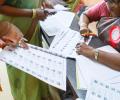
The Supreme Court will hear a plea on October 28 regarding the Special Intensive Revision (SIR) of Delhi's electoral roll. Petitioners seek transparency from the Election Commission on voter deletion reasons and a simplified re-inclusion process for those omitted, especially concerning Form 6. The court had previously raised concerns about "mechanical" notice issuance during the SIR, which led to 47 lakh voter deletions in Delhi.

The Supreme Court expressed concern over the closure of 57 Metro stations and cancellation of trains in Delhi ahead of protests, stating the Centre 'cannot use a hammer to kill a fly' and ordered against complete prohibition of transport services.
The Supreme Court has agreed to examine a plea seeking the recall of its recent split verdict regarding the 2023 law on the appointment of the Chief Election Commissioner and Election Commissioners. This law notably excludes the Chief Justice of India from the selection panel, a change from a previous Supreme Court directive.
The Supreme Court has directed the Central Bureau of Investigation (CBI) and the trial court to ensure the appearance and examination of two crucial victim-witnesses in a Manipur sexual violence case. This order comes amidst the CBI's plea to cancel the bail of two accused, citing concerns over witness intimidation. The court emphasized the authorities' obligation to provide witness protection and set specific dates for the witnesses to depose, as part of its ongoing monitoring of cases related to the 2023 ethnic violence in Manipur.
The Supreme Court clarified that it was not taking cognisance of media reports suggesting government authorities tendered unconditional apologies in contempt proceedings related to restrictions during an October 10 protest. Solicitor General Tushar Mehta explained that apologies are procedural, and authorities have defended their actions, citing reasons like maintaining public order and intelligence inputs. The court emphasised that media coverage was not relevant to its proceedings.

The Supreme Court has agreed to hear petitions challenging Section 16 of the Chief Election Commissioner and other Election Commissioners Act, 2023. This provision grants blanket immunity from civil and criminal prosecution to current and former CECs and ECs for actions taken in their official capacity. Petitioners argue this immunity is unconstitutional and broader than that afforded to other high-ranking officials, potentially undermining accountability.

The Supreme Court has issued notices to the Election Commission and the Centre regarding pleas alleging that the poll body made several decisions without the approval of the two election commissioners. The court stated it would annul any decisions found not to be in accordance with the law, while also refusing an interim order to restrain CEC Gyanesh Kumar from making decisions.
